
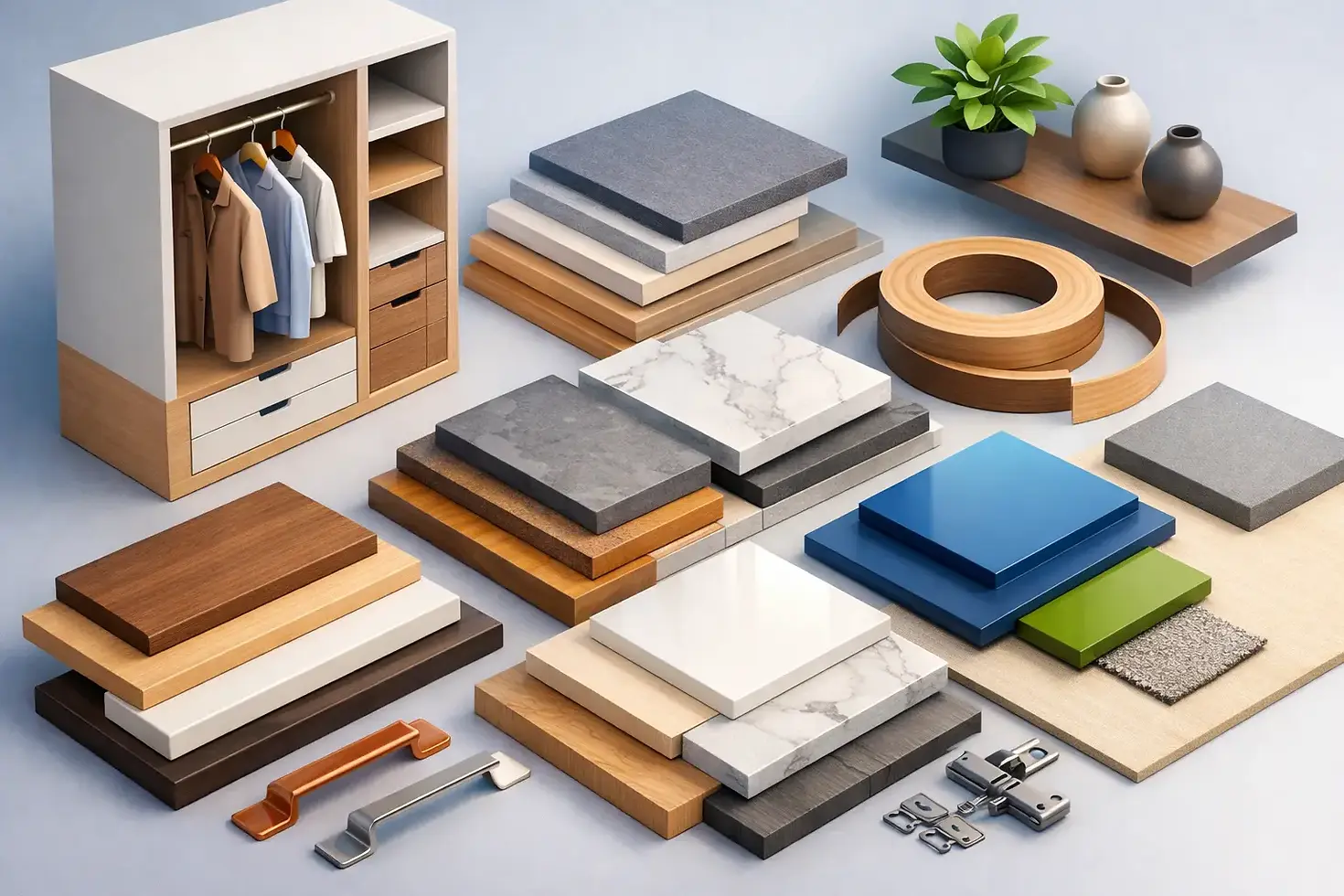
Best Materials for Fitted Furniture Explained

A fitted wardrobe or alcove unit is only as good as the material behind its doors. The best materials for fitted furniture are not always the most expensive ones - they are the ones chosen for the room, the intended use and the finish you want to live with for years. A deep wardrobe carrying heavy clothes needs different construction from a painted media wall or a floating shelf in a quiet reading corner.
For made-to-measure furniture, materials should be selected as part of the design rather than treated as a final detail. The right board thickness, edging, hinges and surface finish all affect how the piece looks, feels and performs once it is installed.
Start with how the furniture will be used
Before comparing materials, consider what the furniture needs to do. Tall bedroom storage needs stable carcasses, strong shelves and reliable door hardware. An alcove unit may need to blend into existing skirting, cornicing and wall colour. A media wall has to accommodate cables, ventilation and the weight of equipment without looking overly bulky.
Moisture, direct sunlight and everyday wear also matter. A material that works beautifully for a low-use display cabinet may not be the best choice for a family wardrobe opened several times a day. There is rarely one perfect material for every element of a fitted project. A well-made installation often combines materials to achieve the best balance of strength, finish and value.
Best materials for fitted furniture: the main options
MDF for painted, tailored finishes
MDF is one of the most widely used materials in bespoke fitted furniture, particularly where a painted finish is required. It has a smooth, consistent surface with no grain or knots, which allows for a clean sprayed or hand-painted result. It can also be machined precisely for shaker-style doors, grooves, mouldings and detailed panelling.
For traditional hinged wardrobes, alcove cabinetry and wall panelling, moisture-resistant MDF is often an excellent choice. It gives a substantial, refined feel and is particularly effective when the furniture is designed to look like a permanent part of the room.
Its limitation is weight. Large MDF panels require careful handling and proper support, especially for long shelves. It is also not suitable for areas exposed to persistent damp unless the appropriate moisture-resistant grade and finish are used. Good preparation, sealed edges and a professional paint system are essential to its lifespan.
Melamine-faced board for durable interiors
Melamine-faced chipboard, often called MFC, is a practical material for wardrobe interiors, cabinet carcasses and shelves. It is available in a broad range of colours and wood-effect finishes, and its factory-applied surface is easy to clean and resistant to everyday scuffs.
This makes it a sensible choice inside fitted wardrobes, where appearance, wipe-clean practicality and budget all matter. A light interior can make clothing and stored items easier to see, while a timber-effect finish can give an open shelving area a warmer look without the cost of solid timber.
Quality varies considerably. A lower-grade board with poor edging can chip or swell if exposed to water, while a premium board with properly applied edging will give a much cleaner, longer-lasting result. Edges deserve particular attention because they are the areas most likely to receive knocks from hangers, shoes, vacuum cleaners and daily use.
Plywood for strength and character
Plywood is made from layers of timber veneer bonded together with the grain direction alternating for stability. It is strong for its weight and holds screws well, making it a good option for shelving, drawer boxes and furniture that needs to carry a heavier load.
Birch plywood can also be used as a visible finish in more contemporary interiors. Its layered edge has a distinctive, honest appearance that suits simple shelving and modern fitted units. It can be clear lacquered, stained or painted, depending on the desired look.
Plywood is usually more expensive than MDF or standard MFC, and the quality of the sheet matters. Lower-grade plywood can contain voids within its layers or have a face veneer too thin for detailed finishing. For visible work, it is worth choosing a furniture-grade product rather than assuming every sheet will perform the same way.
Solid timber for selected features
Solid timber brings natural grain, warmth and a sense of permanence that manufactured boards cannot fully replicate. It is particularly well suited to feature shelving, worktops, bench seats, drawer fronts, decorative trims and handles.
Used thoughtfully, timber can lift a fitted scheme without making the whole project unnecessarily costly. For example, a painted fitted wardrobe may use a timber detail on an open shelf or dressing area to introduce contrast and texture.
Timber does move slightly as humidity changes through the year. That is normal, but it needs to be allowed for in the construction. It is not always the right material for large, uninterrupted door panels or long wall-to-wall runs where a perfectly uniform painted look is the aim. Skilled joinery is about using timber where its natural qualities are an advantage, not forcing it into every part of the design.
Veneered boards for a refined timber look
Veneered boards have a thin layer of real timber on a stable sheet material. They offer the appearance of oak, walnut or another natural species while avoiding some of the movement and cost associated with building large components from solid timber.
They are a strong choice for contemporary wardrobes, media units and open shelving where a real wood finish is central to the design. The result can look exceptionally refined, but it needs careful manufacture. Veneer has a directional grain and should be matched across doors and panels so the finished furniture looks deliberate rather than patchy.
A veneer surface can be repaired or refinished more successfully than many printed wood-effect finishes, although it is still more vulnerable to deep scratches and sharp impacts than a hard melamine surface.
Do not overlook the finish
The material is only one part of the decision. A painted finish, laminate surface, lacquer or oil changes how fitted furniture copes with everyday life.
Paint gives the greatest freedom with colour and is ideal when cabinetry needs to work with existing walls, panelling or architectural details. It can be refreshed in future if tastes change, although a painted surface may show knocks more readily than a textured laminate.
Laminate and melamine finishes are practical for hard-working interiors because they are easy to wipe down and available in convincing stone, timber and matt colour effects. They are generally less forgiving if badly damaged, as local repairs can be difficult to disguise.
For real timber or veneer, clear lacquer gives a more protected, low-maintenance surface. Oils create a natural, tactile finish but may require occasional care, particularly on surfaces touched frequently. The best finish is the one that suits both the look of the room and the level of maintenance you are comfortable with.
Hardware is part of the material decision
A premium board can still disappoint if it is paired with poor hinges, weak drawer runners or inadequate fixings. Doors should open and close cleanly, drawers should run smoothly under load, and shelving should be properly supported along its span.
Soft-close hinges and drawer runners are not simply a luxury. They reduce impact on doors and carcasses, which helps protect the furniture over time. For sliding wardrobes, the track system and door construction are especially important, as these determine how the doors feel every day.
The same applies to handles. Solid metal or well-made timber handles will generally withstand regular use better than lightweight fittings with a thin decorative coating. These small details are where a bespoke installation begins to feel properly finished.
Matching the material to the room
For a painted built-in wardrobe, moisture-resistant MDF doors with a quality MFC interior often provide an excellent combination of appearance and practicality. For open alcove shelving carrying books, plywood or properly supported MDF may be more suitable than a thin board that will bow over time.
For a media wall, the right material needs to support the chosen finish while allowing for access to cables and sensible ventilation around equipment. For a statement timber feature, veneered boards or selected solid timber components can add warmth without compromising the clean lines of a fitted design.
A free design consultation is valuable because the best choice becomes clearer when the room is measured, the existing finishes are considered and the storage requirements are discussed. John Anthony Carpentry designs each piece around those practical details, rather than asking a room to fit a standard unit.
Choose materials with the years ahead in mind: how the doors will be used, what the shelves will hold, how much natural light the room receives and how you want the furniture to age. That is how fitted furniture becomes a lasting improvement to the home, rather than simply a way to fill an empty wall.


Comments